
Everything Involved in Upgrading to LED Lighting
Upgrading to LED lighting can slash your energy bills, helping your business to tackle the cost of living crisis.
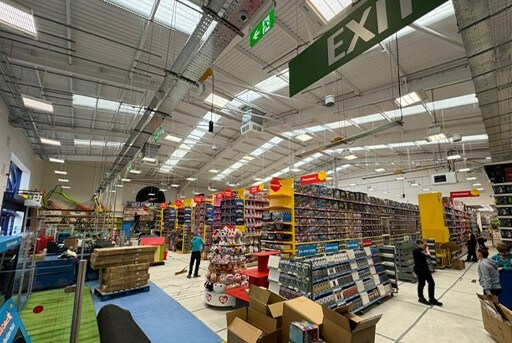
At Wells Electrical Contractors, our NICEIC-approved contractors have supported hundreds of UK businesses to manage LED lighting installations, including toy giant Smyths Toys. However, upgrading to LED lighting for the first time can be intimidating.
In this tell-all guide, we’re going to go through everything businesses like yours must know about making LED lighting a part of your company.
What is commercial LED lighting?
Commercial LED lighting is specifically designed for commercial spaces, including shops, offices and warehouses. It makes sense to see firms increasingly turning to LED lighting because lighting makes up 25% of your electricity bill every year.
What makes LEDs so popular as a commercial lighting choice isn’t just the energy savings or the green benefits but also their versatility. LEDs are designed for any and all workspaces, whether you need dimmable LED lighting or coloured lighting.
Over the years, LEDs have gradually gained ground, with the International Energy Agency (IEA) estimating that LEDs now make up 50% of all global lighting sales.
Considerations of LED lighting before upgrading
LED lighting might involve extensive rewriting, especially if you work in an older building. That’s why working with a professional electrician is vital instead of doing it yourself. However, there are other considerations.
Ask yourself the following questions:
· How much do you currently spend on lighting?
· What are the benefits of LED lighting for my business?
· Am I concerned that my firm’s carbon footprint is too big?
· Does my current lighting setup suit my business needs?
· What is my budget for upgrading to LED lighting?
· Is my lighting adversely impacting employee productivity?
You might be surprised at the answers. The reality is that LED lights are so energy efficient and versatile that this is an investment in your workspace. You’ll save money, support your team, and reduce your emissions all in one.
How much power do LEDs use?
LEDs use the least power of any commercial lighting choice without compromising illumination. According to one study, a single three-watt LED bulb costs around £3.72 to run for a year, based on having it switched on for ten hours every day. Contrast this to a fluorescent bulb under the same conditions, which costs £14.89 to run.
Are LED lights energy-efficient?
LEDs are the most energy-efficient bulbs on the market today. An LED bulb uses 90% less energy than incandescent or halogen bulbs because they don’t lose most of their energy to heat generation.
How long do LEDs last?
LEDs will also last the longest, meaning less maintenance costs and hassle for your firm. How long they last depends on the brand you buy, but you can usually expect around 50,000 hours of light from every LED bulb.
If you use an LED for 10 hours a day on average, your bulb should last around 14 years. Pick up a premium brand, and you might get as many as 100,000 hours out of a single bulb, meaning it’ll last for a generation.
How bright are LEDs?
LEDs are as bright as you want them to be. With so many options on the market, you can have everything from basic LEDs with 300-500 lumens – which tend to be found in the average UK home. On the other hand, you also have outdoor LED floodlights with as many as 20,000 lumens.
Plus, you can install dimmable lights, which allow you to change the lighting output as needed.
Plan your LED Upgrade with Our Team Today
Where can LED lights be installed?
LED lights are suitable for indoor and outdoor use. One area where they excel is in providing directional light, which can be used to provide better illumination for workspaces or aesthetic purposes.
Some of the most common locations for commercial LEDs include:
· Kitchens
· Bathrooms
· Offices
· Stairways
· Carparks
· Floodlights
· Retail floors
They’re perfectly safe to use even in sensitive workspaces because of their low heat output and reliability. However, we understand that every business is different, which is why we use our 15 years of experience to advise businesses on how they can make the most of their LED lighting installations.
How to upgrade to LED Lighting
Upgrading to LED lighting should always be done under the guidance of a professional electrician like Wells Electrical Contractors. It’s always dangerous to work with electrical systems, and changing to LED lighting doesn’t mean just changing the bulbs around.
Some of the considerations a professional service will factor into their plans include:
· Type of bulb
· Type of fixture base
· Brightness
· Colour temperature
· Installation angle
· Directional lighting
LED lighting is the best choice, but how it performs depends on the quality of the LED and the person installing it. Poorly installed LED lights won’t let you get the full benefits. Moreover, it’s unsafe to attempt an upgrade yourself.
Your job is to determine your needs, goals and budget. Everything else should be left to a professional.
Do you need to change the wiring for LED lights?
Rewiring may be necessary if your building is more than 25 years old. Your wiring and all installations must be up to code, or you could be in violation of workplace health and safety laws.
The last thing you want is to launch an upgrade only to find that your wiring has issues. Every issue is fixable, but not anticipating these issues will only cause your upgrade costs to balloon.
What types of LED bulbs are there to choose from?
LED bulbs come in all shapes and sizes, with many designed to simplify the switch to LEDs by matching existing fixtures and bulbs.
Some of the most common LED shapes you’ll find include Spot, Candle, GLS, and GU10. You’ll also find bayonet, screw, and GU10 base caps. Naturally, this can get confusing quickly, which is where a professional electrician comes in handy.
What colours are LED bulbs available in?
LED bulbs are available in every colour under the sun. If you can imagine it, you’ll find an LED in that colour and shade. That’s why you’ll often see them used for retail display and restaurant lighting because they’re capable of creating an epic ambiance.
Book in an LED Upgrade with Us
Do you need an EICR before upgrading to LED lighting?
An Electrical Installation Condition Report (EICR), or fixed wire testing, is the standard inspection for a business’s electrical installations. Generally, you’ll get one of these every five years to ensure it’s fit for purpose and isn’t at risk of bursting into flames.
Even if you’re not due for another one, it’s strongly recommended that you order an EICR first. Any type of upgrade should mandate one of these tests to guarantee that there aren’t any faults in your electrics.
You don’t want to carry out an upgrade only to discover extensive remedial work has to be carried out. Moreover, it’s just good practice to enforce rigorous electrical health and safety standards as part of your business.
At Wells Electrical Contractors, we boast over 60 years of collective experience. We support all businesses in managing their LED upgrades and staying on top of their maintenance needs, such as our project at The Bluecoat Liverpool. To launch your LED upgrade, contact us today.