
What Protection Do RCDs Provide?
Electrical safety is achieved by building a safe, reliable system, but within that system are special devices known as Residual Current Devices (RCDs). These are designed to protect everyone from electric shocks, ensuring you don’t suffer from severe injuries or even lose your life.
Yet so many Brits are unaware of these devices and what they do. According to the latest research, 46% of Britons didn’t know what RCDs were. And that’s a problem because it means many businesses are unwittingly falling below the necessary electrical safety standards.
At Wells Electrical Contractors, we’re here to deliver the highest standards of electrical safety. With over 65 years of combined experience, we’ve served some of the UK’s leading businesses, including Smyths Toys and Bluecoat Liverpool. Here’s what all businesses should know about RCDs.
The primary function of RCDs
RCDs are considered to be the gold standard of electric shock prevention. According to the latest research, around 1,000 workplace electrocutions are lodged with the Health and Safety Executive (HSE) each year, with 30 fatalities, which is far too high.
The purpose of an RCD is to track the electrical current in any given circuit. If it detects any leakage, it will cut the power supply to prevent electric shocks and lower the risk of an electrical fire breaking out.
RCDs are designed to kick in when leakage happens for any reason, including:
· Electrical faults
· Appliance/circuit damage
· Water contact
· Live wire contact
Since being introduced, they’ve played a pivotal role in slashing the number of electric shocks and have saved countless lives. It’s why they’re a standard feature of electrical safety, not just in the UK but around the world.
Keep Your Premises Safe with RCD Protection
Who needs RCD protection?
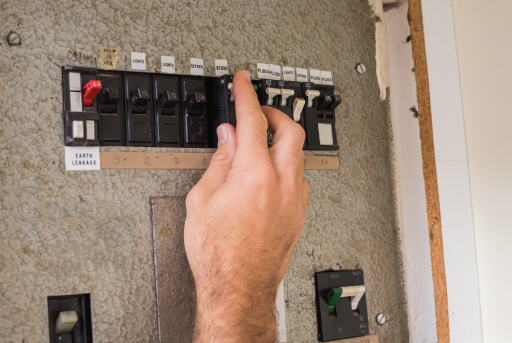
RCD protection is recommended for every commercial outlet, including corner shops, shopping centres, cinemas, theatres and hotels. Realistically, RCD protection is strongly recommended for any building, including residential, governmental, and industrial facilities.
You might be surprised that RCD protection is mandatory to comply with health and safety laws. The 18th Edition Wiring Regulations state that RCDs are legally required to achieve the minimum standard of health and safety in these situations:
· Circuits supplying lighting fixtures.
· Circuits supplying portable equipment to be used outdoors.
· Socket outlets with ratings of up to 32A in high-risk environments (kitchens, bathrooms, etc.)
The fact is that this is largely a redundant question because there’s no reason not to have RCD protection. At Wells Electrical Contractors, our NICEIC-approved contractors specialise in helping businesses not just meet the minimum standards but go beyond them.
Find out more about why businesses need RCD protection.
What protection do RCDs provide?
RCDs protect against electric shocks and electrical fires. It’s their role to detect changes in electrical flow and to immediately cut power to the circuit. By cutting off the power to that circuit, it essentially means there’s no longer any electrical flow from the main fuse board.
The reason why they’re so effective is that RCDs cut off the power supply within milliseconds, meaning there’s no opportunity to deliver an electric shock to an unwitting bystander.
Moreover, RCDs protect against electrical fires. Faults within wiring and appliances can result in overheating, which could cause a fire. RCDs can detect these faults by charting the balance between the neutral and live currents. Whenever there’s a problem, the RCD interrupts the electrical flow and so stops overheating in its tracks.
But it’s also vital to mention that these two forms of RCD protection also result in protection for your business. Firms that invest in RCDs mitigate the fallout of a health and safety incident, including:
· Regulatory fines
· Employee downtime
· Business interruption
· Reputational damage
Even minor electric shocks and small fires can cause catastrophic damage to your day-to-day operations. Don’t just see RCDs as an exercise in health and safety, but as a way to protect the future of our business.
The UK standard for electrical installation safety

In the UK, British-Standard 7671, also known as the IET Wiring Regulations, dictates electrical installation safety. Within these regulations, RCDs are also included. They detail when they must be installed, who they’re installed by, and how.
We’ve already discussed some of the environments where RCDs are required, but it’s also important to mention that they aren’t something anybody can install. BS-7671 clearly outlines that a qualified electrical installer must install them.
RCDs must then be tested to ensure that they’re working correctly. Trying to do it with the DIY approach compromises your firm’s electrical safety standards and exposes you to enormous legal liability if an accident occurs.
Note that although BS-7671 isn’t a law itself but a statute, it’s widely recognised that non-compliance means violating the Health & Safety at Work Act and the 1989 Electricity at Work Regulations, which are laws.
Let Us Protect Your Business with RCDs Today
The reliability of RCDs for your business
Are RCDs reliable for preventing electric shocks and fires?
RCDs are incredibly reliable, which is why they’re recommended in every setting. According to the Electrical Safety Council, fixed RCDs boast a 97% reliability rate, at a minimum. This rate increases with regular testing. It’s why so many manufacturers now automatically incorporate them into things like sockets.
Like all electrical safety components, they only work if regularly monitored and tested. At Wells Electrical, we provide full design, installation, and testing services to give you peace of mind that your business is protected at all times. To learn more about our RCD installation services, contact us today.